
Retail stocktaking across multi-site estates
Overnight counts, SKU-level variance, shrinkage by category and store — and the fixtures, EPOS and refrigeration verified in the same programme.
Retail margins are thin enough that stock accuracy is not an administrative nicety — it is trading information. Every phantom-positive SKU triggers a missed replenishment and a lost sale; every unrecorded loss flatters the gross margin until the annual count corrects it in one painful adjustment. And because shrinkage hides inside book stock between counts, a retailer that counts once a year is managing loss with one data point — a single annual photograph of a business that changes every hour.
CPCON runs retail stocktaking programmes across multi-site UK estates: trained counters, identical count rules in every store, and reconciliation that produces comparable accuracy and shrinkage figures by store, category and period. Counts are scheduled overnight or pre-opening so trade is never interrupted, and year-end counts are structured so your auditor can attend and test efficiently — the expectation set by ISA (UK) 501 wherever stock is material, sitting on top of the Companies Act 2006 s.386(4) duty to keep statements of stocktakings behind the year-end stock figure. With more than 30 years of international experience and over 4,500 inventory and asset projects delivered, we bring a method built for estates, not single rooms.
What we deliver for retailers
Full-store & section counts
Sales floor and stockroom counted to a defined accuracy standard, with supervisor blind recounts on sample sections every night.
Shrinkage analysis
Variance valued at cost and retail, split into known and unknown loss, trended across stores and categories to direct investigations.
Overnight, every time
Counts planned around trading hours and peak seasons — golden-quarter freeze dates respected, January counts at scale.
RFID item-level counting
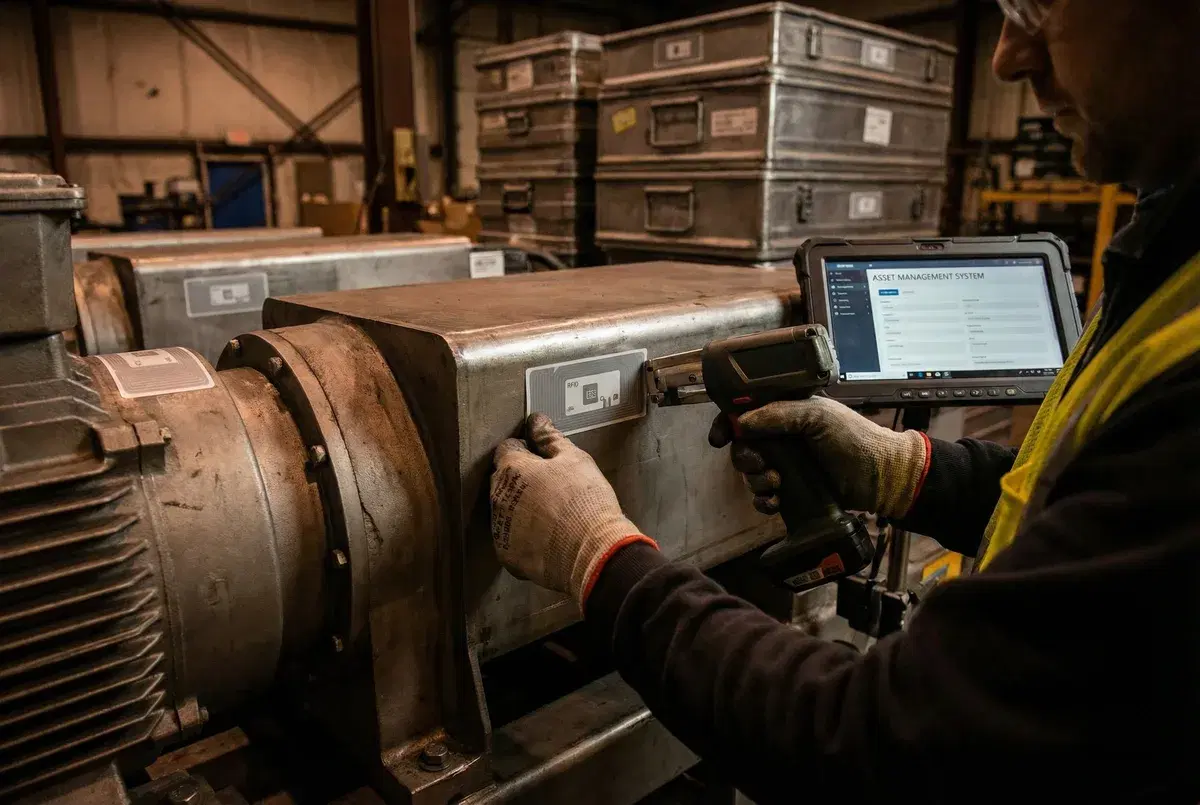
For RFID-tagged merchandise, reader-based counts cover a store in a fraction of the time, enabling weekly accuracy instead of annual.
The two stock problems retail has to solve
Retail stock failure is really two distinct problems wearing the same uniform. The first is availability: when the book stock says a line is in stock but the shelf is empty, the system suppresses replenishment and the sale walks out of the door. The second is shrinkage: stock that the business paid for and never sold, whether through theft, damage, mis-delivery, mis-scanning at the till or process error in goods-in. Both corrupt the same number — the stock file — but they demand different responses, and a count that does not separate them leaves management chasing the wrong cause.
A professional stocktake is the instrument that splits them apart. It does not simply tell you that the store is 2.1% down on book; it tells you which categories are down, whether the loss is concentrated in a handful of high-theft lines or spread thinly across the range, and how this branch compares with the rest of the estate counted to the same rules. That is the difference between a number and a diagnosis.
Known loss versus unknown shrinkage
Good shrinkage reporting begins by carving out the losses you can already explain. Markdowns, recorded waste, damages booked to a wastage code and supplier shortages logged at goods-in are known loss — undesirable, but understood and controllable through pricing and supplier management. What is left after those are removed is unknown shrinkage: the gap between book and physical that no document explains. That residual is where theft, unrecorded process error and till fraud hide, and it is the number that a shrinkage programme is built to attack.
From annual event to continuous control
The strongest retail estates treat the wall-to-wall count as a baseline, not the control itself. From that baseline we design cycle counting programmes that keep high-risk categories continuously accurate, a stock reconciliation discipline that investigates variances before posting them, and a shrinkage control loop that turns count data into named, fixable causes. Where merchandise is RFID-tagged at source, weekly whole-store counts become routine — the operating model behind the most accurate large-format retailers.
| Model | What it is | Frequency | Best for |
|---|---|---|---|
| Wall-to-wall count | Every SKU in the store counted in one event | Annual / bi-annual | Year-end audit evidence, full revaluation baseline |
| Cycle counting | A rolling subset counted continuously, weighted to risk | Daily / weekly | Holding accuracy on fast and high-value lines |
| RFID full read | Reader sweep of all tagged items in minutes | Weekly / on demand | Omnichannel availability, apparel and accessories |
| Perpetual (POS-driven) | Book stock maintained by sales and receipts, validated by counts | Continuous | Replenishment engines that still need physical truthing |
RFID in retail: from snapshot to live stock truth
Item-level RFID is the technology that finally made frequent, store-wide counting affordable. A handheld or fixed reader can inventory a fashion floor in minutes rather than the hours a barcode scan demands, which collapses the cost of counting and lets accuracy be measured in days instead of months. The retailers that have adopted it most aggressively — apparel and footwear chains where every garment carries a tagged price ticket — now run inventory accuracy north of the high-nineties, and treat the stock file as a real-time asset rather than a quarterly estimate.
The benefits compound through the omnichannel operation. An accurate, continuously refreshed stock figure is what makes ship-from-store and click-and-collect reliable: orders route to stores that genuinely hold the item, cancellations fall, and the available-to-promise number stops being a guess. We plan the read methodology around the physics that actually trip RFID up — metal shielding, liquid-dense product, tag collision in high-density displays — and reconcile the read against the system so the technology delivers truth, not just speed. The wider design of readers, tags and process sits in our RFID asset tracking practice.
How a CPCON retail count runs
A reliable count is mostly won before anyone picks up a scanner. The difference between a number management trusts and one it argues about is preparation: agreed scope, agreed cut-off, a clean book-stock extract and a layout the team can count in a controlled sequence. Our method runs to four stages, applied identically in every store so the results compare.
- Planning & cut-off. Count scope, the treatment of goods-in-transit and customer reservations, the book-stock extract and the store layout map are agreed in advance. Cut-off discipline is decided here — what counts as in-stock at the count moment, and how deliveries or despatches during the window are handled — because a fuzzy cut-off invalidates an otherwise perfect count.
- The count. Trained counters work the store to a defined sequence and accuracy standard, sales floor and stockroom, with supervisor blind recounts on sample sections every night. On tagged estates an RFID read covers the floor in minutes; on barcode estates the scan is structured so no fixture is double-read or skipped.
- Reconciliation. Counted quantities are matched to book stock line by line, and obvious explanations — mis-picks, location errors, units-of-measure mismatches — are resolved on the spot before a variance is ever reported as real shrinkage. This is where a raw count becomes trustworthy information.
- Reporting & sign-off. The store manager signs the variances before trade resumes, and the estate report follows: accuracy and shrinkage by store, category and period, valued at cost and retail, with known loss separated from unknown shrinkage.
Sales floor and stockroom are two different counts
A store is not one space but two counting problems. The sales floor is dense, faced-up and full of customer disturbance — stock is moved, hidden behind other stock, tried on and abandoned, or sitting in baskets — so the discipline is systematic sweep coverage and recounts on high-density fixtures. The stockroom is where the largest single-line quantities sit and where errors are biggest when they happen: cartons mis-labelled, overstock in the wrong bay, returns and customer reservations not yet processed. Counting the two with the same rote method understates the risk in each. We sequence them separately, control movement between them during the count, and reconcile both to the same book extract so the store’s true position — not just the shelf’s — is captured.
Where shrinkage actually comes from
Unknown shrinkage is rarely one thing. Treating it as “theft” wholesale leads to spending on security that never touches the real cause, because a large share of retail loss is operational and internal rather than external. A count that reports loss by category, store and period lets the investigation start from evidence. The usual sources break down as follows.
| Source | What it looks like | Where the fix sits |
|---|---|---|
| External theft | Concealment, grab-and-run, organised retail crime on hot lines | Security, layout, source-tagging high-risk SKUs |
| Internal theft | Till manipulation, refund fraud, unrecorded staff removals | EPOS exception reporting, refund controls, segregation of duties |
| Process error | Mis-scanning, wrong units of measure, unbooked transfers | Goods-in discipline, scan training, transfer controls |
| Supplier shortage | Short or wrong deliveries booked in full at goods-in | Receipt checking, claims process, supplier scorecards |
| Waste & damage | Perishable spoilage, breakage, date expiry, markdown leakage | Waste recording, range/forecast tuning, handling |
Note how few of these are solved by a guard on the door. That is the value of category-and-store-level reporting: it points the investigation at the EPOS log, the goods-in dock or the supplier scorecard when that is where the loss really is, and reserves the security spend for the SKUs and sites that genuinely face external theft. The disciplined loop from count data to named cause to fix is our shrinkage control service.
The numbers we report
A count is only as useful as the report behind it. We do not hand back a single estate percentage; we hand back the figures a buyer, a loss-prevention lead and a finance team each need to act.
- Stock-file accuracy — the proportion of lines where counted equals book, by store and category, the headline health metric for replenishment.
- Shrinkage at cost and at retail — the loss valued both ways, because the cost figure is the P&L hit and the retail figure is the sales opportunity foregone.
- Known vs unknown split — recorded waste, markdown and supplier shortage carved out, leaving the residual that needs investigating.
- Estate league table — accuracy and shrinkage ranked by store and region, with trend lines across count periods rather than isolated snapshots.
- Exception & obsolete schedules — damaged, date-expired and slow-moving stock flagged for markdown or write-off, with the evidence trail for the adjustment.
Turning those counted variances into governed, posting-ready adjustments — rather than someone overwriting the stock file by hand — is the discipline of stock reconciliation, and a downloadable starting point for in-house teams is our stock count template.
Fixtures and fittings are fixed assets too
Trading stock is only half of a retail balance sheet. The other half is the physical store itself — shopfit, gondolas, counters, shelving, lighting, refrigeration, air handling, EPOS terminals and back-office IT — and this is fixed asset territory governed by FRS 102 Section 17. Retail estates are unusually hard on their fixed asset registers because stores are refitted on a cycle: a refurbishment strips out and replaces large parts of the shopfit, yet the old assets are frequently never derecognised and the new ones land on the register as a single undifferentiated “store refit” line that cannot be depreciated honestly or written off when the format changes again.
The result is a register that drifts further from reality with every refit cycle — ghost assets for kit that left years ago, missing assets for kit that was installed and never recorded, and capitalised lumps that defeat componentisation. The same field visits that count stock can carry the fixed asset agenda: store fixtures, refrigeration, EPOS and IT verified and tagged against the register, so refit write-offs and new fit-out capitalisation stop being year-end archaeology. The valuation of that estate — for insurance and for accounting — is handled in the same programme by our asset valuation practice.
Typical retail fixed asset categories
| Asset class | Examples | Common register failure |
|---|---|---|
| Shopfit & fixtures | Gondolas, shelving, counters, fitting rooms, signage | Capitalised as one “refit” lump; old fit never written off |
| Refrigeration & HVAC | Chillers, freezers, cold rooms, air handling | Replaced units not derecognised; integral features mis-pooled |
| EPOS & checkout | Tills, self-checkout, scales, payment terminals | Churned between stores without register movement |
| Back-office IT | Servers, networking, store laptops, handhelds | No serial-level link to the CMDB or ITAM tooling |
Multi-site is a programme, not a count
A single-store count is an event; an estate count is a logistics exercise that has to deliver comparable data from every location. We wave the estate by region or trading cluster, deploy the same briefed teams against the same count rules, and aggregate results into one dataset — so the output is a league table of accuracy and shrinkage by store, not a stack of incompatible local spreadsheets. That comparability is the whole point: it is what lets a regional manager see that three stores share a goods-in problem, or that a single category is leaking across an entire format.
- One count standard, every store. Identical sequences, cut-off rules and accuracy thresholds, so a 2% variance means the same thing in Leeds as in Bristol.
- Scheduling around trade. Waves planned to avoid peak weeks and to hit the locations the auditor will sample for year-end.
- Comparable reporting. Accuracy and shrinkage ranked by store, region and category, with trend lines across count periods rather than isolated snapshots.
- One mobilisation. Stock and fixed assets captured in the same visit where it suits the estate, halving site disruption and travel.
Timing the count to the retail calendar
When you count matters almost as much as how. We deliberately keep full counts out of the golden quarter, when the estate is at peak stock and peak footfall, and instead schedule the wall-to-wall for the quieter windows that follow the sale periods — late January for fashion and general merchandise, mid-summer before autumn ranges land — with the year-end count timed so the auditor can attend. Grocery and convenience, where perishable shrinkage moves fast, are better served by frequent cycle counts than by one annual set-piece. Through the peak itself, cycle counting on the fast and high-value lines holds accuracy without ever closing the doors.
Designing a retail cycle-counting programme
A wall-to-wall count tells you where you stand on one night; a cycle-counting programme keeps you standing there all year. The art is in the weighting: counting every line at the same cadence wastes effort on stable stock and under-watches the lines that actually move and disappear. We design the programme around an ABC-style ranking that counts high-risk, high-value and fast-moving stock often, and stable slow lines rarely, so the counting effort follows the risk rather than the shelf map.
| Class | Typical lines | Count cadence | Why |
|---|---|---|---|
| A — high value / high theft | Electronics, spirits, fragrance, hot fashion | Weekly | Largest loss per unit; fastest to walk |
| B — moderate | Core ranges, mid-price general merchandise | Monthly | Material but more stable than A |
| C — low value / stable | Bulky low-margin, slow-moving lines | Quarterly / annual | Low loss exposure; effort better spent elsewhere |
On RFID-tagged ranges the economics change again, because a reader sweep is so quick that even “C” lines can be read weekly at near-zero marginal cost — which is why tagged apparel estates can run whole-store accuracy continuously. The cycle programme sits on top of a periodic full-count baseline and feeds the same governed reconciliation, so the stock file stays trustworthy between wall-to-wall counts instead of decaying until the next annual correction.
Goods-in is where accuracy is won or lost
By the time a discrepancy shows up at the annual count, the trail that would explain it has usually gone cold. A surprising share of unknown shrinkage is not theft at all but unrecorded process error that originated at the loading dock: a delivery booked in full when a carton was short, a substitute SKU received against the wrong line, a unit-of-measure mismatch that records a case as a single, or an inter-store transfer that left one store’s book stock but never arrived on another’s. Each of these manufactures a phantom that the count later has to absorb as “loss”.
Counting is what surfaces the pattern — when the same category is persistently down across stores served by one depot, the investigation belongs at goods-in, not on the shop floor — and disciplined receipt checking is what stops the error being created in the first place. We report variances in a way that distinguishes receipt-driven loss from shelf-driven loss, so the supplier scorecard and the goods-in process get the attention the evidence actually warrants rather than the security budget absorbing a problem it cannot fix.
Returns and reverse logistics
Omnichannel retailing multiplies the points at which stock changes hands, and returns are the most under-controlled of them. A returned item has to be inspected, graded, re-valued and either put back to saleable stock, sent to clearance or written off — and at every step the book record can diverge from reality. Goods booked back as saleable that are actually damaged inflate available stock and generate orders that disappoint; returns in transit between channel and store sit in a limbo that no single system owns. A count that reaches into the returns area, the quarantine bay and the markdown cage — not just the faced-up sales floor — captures the stock that these processes routinely lose track of, and feeds an honest figure back to the channels that depend on it.
Hospitality and wet stock: a retail count with a yield problem
Retailers that also operate bars, cafes, restaurants or in-store food-to-go carry a counting problem that ordinary merchandise does not have: portioned and decanted stock, where the gap between what was bought and what was sold is governed by yield and pour accuracy as much as by theft. Wet stock in particular — spirits, draught, wine — leaks through over-pours, wastage and unrecorded staff drinks in ways that only a proper stock take with gross-profit analysis can quantify. The count there is not just a quantity check; it is a yield check, comparing theoretical gross profit (what the sales should have yielded given the stock consumed) against actual, and surfacing the lines and sites where the two diverge.
We run wet and dry hospitality counts with that gross-profit lens built in, so a hospitality operation inside a retail estate is held to the discipline that makes bars profitable rather than counted like a stockroom. The full service description, including pub, bar and hospitality counting, sits under stocktaking services.
The economics of getting it right
Stock accuracy is not a back-office virtue; it is a margin lever with a measurable return. The losses from a drifting stock file compound from several directions at once, which is why the payback on a proper counting programme is usually faster than retailers expect.
- Lost sales from phantom stock. Every line the system believes is in stock but is not suppresses replenishment and forfeits the sale — invisible in the accounts, real in the footfall.
- Margin erosion from unknown shrinkage. Loss that is never explained quietly lowers gross margin until the annual count books it in one correction, distorting every interim result in between.
- Markdown and disappointment in omnichannel. Inaccurate availability drives accepted orders that cannot be fulfilled, cancellations, and the markdown that follows mis-stated stock.
- Audit cost and risk. A register and stock file the auditor cannot rely on means more testing, more adjustments and a harder year-end — all avoidable with counts structured for attendance.
Against those costs, a programme of full-count baselines plus cycle counting — and, where merchandise is tagged, RFID reads — pays back by converting invisible loss into named, fixable causes and by keeping the available-to-promise figure honest enough to trade on.
Compliance, audit and the year-end stock figure
For any retailer dealing in goods, the stock figure is not just a management number — it is a statutory one. The Companies Act 2006 s.386(4) duty to keep statements of stocktakings means the year-end count has to produce a record that stands behind the balance-sheet stock value, and where stock is material the external auditor will expect to attend a count under ISA (UK) 501, observing the process and testing the result. A count run for management insight and a count run for audit evidence are not two different exercises; they are the same disciplined count, structured so the auditor can rely on it.
We time the wall-to-wall around the year-end the auditor needs to attend, document the count method and cut-off so the evidence is defensible, and deliver a signed statement of stocktaking alongside the variance and shrinkage reporting. The same field discipline that satisfies the auditor is what makes the number trustworthy enough to buy and trade on the rest of the year. Sectors with comparable estate and inventory dynamics — and the same audit expectations — are covered under logistics & warehousing and manufacturing.
Why retailers choose CPCON
We bring more than 30 years of international inventory experience and over 4,500 delivered projects to retail estates, and we resource them with our own trained teams rather than ad-hoc labour — the same counters, briefed to the same standard, returning wave after wave. Our differentiator across every engagement is the reconciliation of physical × logical × CMDB: what is on the shelf and the shopfloor, what the stock and fixed asset systems claim, and — for the IT estate — what the configuration management database holds. For the full stock-side service description see stocktaking services, and for sister sectors with comparable estate dynamics see logistics & warehousing and manufacturing.
Frequently asked questions
How do you count a store without disrupting trade?
Most retail counts run overnight or before opening: the team arrives at close, counts sales floor and stockroom to an agreed sequence, and signs off variances with the store manager before trading resumes. For larger formats we count in zoned sections across consecutive nights, with movements between counted and uncounted zones controlled so nothing is counted twice or missed. Where a department store or supermarket cannot close, we operate a strict cut-off discipline — goods-in and goods-out are paused or logged during the count window — so the snapshot is clean even while the building is live.
Can you count our whole estate, not just one store?
Yes — multi-site programmes are the normal engagement. We schedule waves across the estate (typically by region or by trading cluster), apply identical count rules in every store so results are comparable, and report a like-for-like accuracy and shrinkage league table by store, category and period. Comparability is what turns counts into management information: when every store is counted to the same standard, a high-shrinkage branch stands out as a process problem to investigate rather than a number to argue about.
Do you count store assets as well as stock?
Yes. Fixtures, fittings, gondolas, refrigeration, EPOS and back-office IT are fixed assets with their own register problems — refits leave ghost assets behind, and new fit-outs often go on the books as one undifferentiated lump that cannot be depreciated honestly or written off when the store closes. We verify and tag store assets in the same visit or as a separate fixed asset programme, reconciling what physically exists against the fixed asset register so capitalisation and disposals reflect reality.
What does the shrinkage report actually tell us?
Where the loss is, not just how big it is: variance by SKU, category, store and count period, valued at cost and at retail, separating known loss (waste, damage, markdown) from unknown shrinkage. Patterns across stores and categories point investigations at process failures, supplier issues or theft rather than guesswork — the starting point of any shrinkage control programme. A single high-value category leaking in one region looks very different from a uniform percentage across the estate, and the report makes that distinction explicit.
When in the year should a retailer count?
It depends on the trading calendar and the financial year-end. Fashion and general merchandise typically count in late January and again in mid-summer, after the sale periods have cleared seasonal stock and before new ranges land. Grocery and convenience count more frequently because perishable shrinkage moves fast. We deliberately avoid the golden quarter (the run-up to Christmas) for full counts and instead schedule the wall-to-wall around the year-end the auditor needs to attend, with cycle counting holding accuracy through the peak.
How does RFID change retail counting?
For RFID-tagged merchandise a reader-based count covers a whole store in a fraction of the time a manual scan takes, which is what makes weekly or even daily counts economic. Instead of one annual snapshot, the retailer gets continuous item-level accuracy that feeds replenishment, click-and-collect availability and omnichannel order routing. The tagging has to be applied reliably (usually at source on the garment ticket), and the read methodology has to account for shielding and tag density — we plan both as part of the programme rather than assuming the hardware does it.
Can you support omnichannel and ship-from-store accuracy?
Yes. The moment a store fulfils online orders, its stock file stops being a back-office record and becomes a customer-facing promise: every phantom-positive SKU risks an accepted order that cannot be picked. Accurate, frequent counts — manual cycle counts on fast lines, RFID where merchandise is tagged — keep the available-to-promise figure honest, which is the single biggest lever on cancelled ship-from-store orders and the markdown that follows mis-stated availability.
Get a stocktaking programme for your estate
Tell us about your sites and asset volumes — we respond within one business day with a scoped proposal.
Request a Proposal